Every September, Cartagena relives one of the most important chapters of its history with the Carthaginians and Romans Festival, a celebration that transforms the city centre into a grand stage of historical reenactments, parades, battles, ceremonies and popular gatherings for ten days.
The festival revisits some of the key events that shaped the development of ancient Qart Hadasht and its later transformation into Carthago Nova, one of the most important cities in Roman Hispania. This heritage remains very much present in Cartagena today through its archaeological sites, monuments and historic landmarks, which help explain the city’s strategic importance in the Mediterranean.
For first-time visitors, understanding the meaning behind each event and knowing the main highlights makes the experience far more rewarding. In this guide, we explore what the Carthaginians and Romans Festival is, when it takes place, its most notable events, and the other places well worth discovering during a visit to Cartagena.
What is the Carthaginians and Romans Festival?
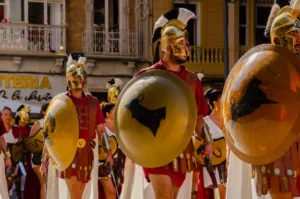
The Carthaginians and Romans Festival recreates some of the historical events that took place in Cartagena more than two thousand years ago, when the city was known as Qart Hadasht and became one of the main Carthaginian strongholds on the Iberian Peninsula.
Following the Roman conquest, the city became Carthago Nova, an important port in the western Mediterranean and one of the major urban centres of Roman Hispania. This period left a legacy that can still be seen today in some of Cartagena’s most important landmarks, particularly the Roman Theatre, the Roman Forum and the Punic Wall.
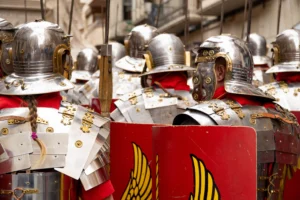
For ten days, Carthaginian troops and Roman legions symbolically take over the city’s streets once again. The programme follows a historical narrative that includes the foundation of Qart Hadasht, the Wedding of Hannibal and Himilce, Hannibal’s departure towards Rome and, finally, the arrival of the Roman forces and the conquest of the city.
Beyond the historical reenactments, the festival forms an important part of Cartagena’s identity and offers visitors a different way to connect with a history that remains very much alive throughout the city.
When is the Carthaginians and Romans Festival held?
The festival takes place every year during the second half of September and lasts for ten days.
In the current edition, the programme runs from 18 to 27 September and includes events across different parts of Cartagena, from the harbour and the historic centre to Cartagonova Stadium.
Must-See Carthaginians and Romans Events and Programme Highlights
| Date | Event | What to expect |
| 18 september |
Sacred Fire Lighting Ceremony and Opening Proclamation
|
The official start of the festival and the beginning of ten days of celebrations.
|
| 19 september |
Foundation of Qart Hadasht and Grand Carthaginian Parade
|
A day focused on the city’s Carthaginian origins, featuring one of the first major parades of the festival.
|
| 21 september |
Wedding of Hannibal and Himilce
|
One of the festival’s best-known and most iconic historical reenactments.
|
| 23 september |
Grand Circus Maximus
|
A spectacular Roman-inspired show held at Cartagonova Stadium.
|
| 24 september |
Landing of the Carthaginian Fleet and Hannibal’s Departure for Rome
|
The harbour becomes one of the main settings for the day’s events.
|
| 25 september |
Roman Landing and Battle for the Conquest of Qart Hadasht
|
One of the central moments of the festival, recreating the arrival of Rome and the conquest of the city.
|
| 26 september |
Grand Parade of Troops and Legions
|
Carthaginians and Romans march together through the streets of central Cartagena.
|
| 27 september |
Extinguishing of the Sacred Fire
|
The closing ceremony of the festival, accompanied by final celebrations and a fireworks display.
|
Discover Carthago Nova and What Else to See in Cartagena
Combining the festival with a visit to Cartagena’s historical heritage brings its story even more vividly to life.
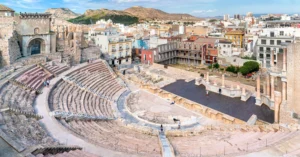
The Roman Theatre is one of the great symbols of ancient Carthago Nova and offers a fascinating insight into the importance the city achieved during the Roman period. Just a short walk away, visitors can also explore the Roman Forum Museum, the Punic Wall and other archaeological sites that help explain the city’s evolution from Qart Hadasht to its Roman era.
Beyond its historical legacy, Cartagena’s historic centre invites visitors to stroll along Calle Mayor, explore the waterfront and admire the City Hall, while discovering the city’s remarkable modernist architecture and its enduring connection to the Mediterranean.
What You Should Know Before Visiting the Festival
If this is your first time attending the Carthaginians and Romans Festival, it is worth deciding in advance which events you would most like to see, particularly if you only have one or two days to spend in the city.
The major parades and historical reenactments attract large crowds, so arriving early is recommended. It is also advisable to check which events require tickets and to consult the official programme before your visit, as schedules may be subject to change.
Visitors with limited time may wish to prioritise the Roman Landing and Battle for the Conquest of Qart Hadasht or the Grand Parade of Troops and Legions, while a longer stay allows time to combine the festival with Cartagena’s historical landmarks and other attractions in and around the city.
La Manga Club as the Perfect Base for Exploring Cartagena and Its Surroundings
Experiencing the festival does not necessarily mean spending your entire stay in the city centre.
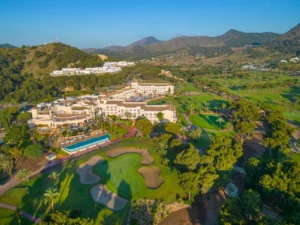
La Manga Club is located just 20 minutes by car from Cartagena, providing a convenient base from which to enjoy the festival’s main events before returning to a more peaceful setting by the Mediterranean.
This allows visitors to begin the day exploring ancient Carthago Nova, continue with parades, landings and historical reenactments, and end it with a relaxed dinner, a wellness treatment at Alma’ Spa, or simply unwinding after a busy day in the city.
A stay at La Manga Club also offers the opportunity to discover some of the most remarkable landscapes in this part of the Region of Murcia. The Calblanque Regional Park, the Mediterranean beaches and the Mar Menor provide the perfect complement to a cultural visit, revealing another side of Cartagena beyond its historic centre.
A combination of history, coastline, nature and relaxation that allows visitors to make the most of the festival while exploring the wider destination at a more leisurely pace.